Article Sidebar
Main Article Content
Abstract
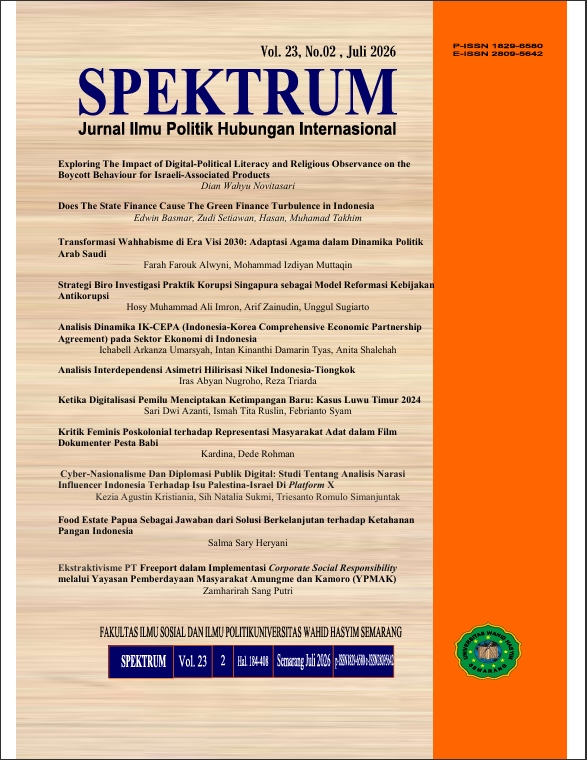
This article analyzes the documentary film Pesta Babi: Kolonialisme di Zaman Kita as a visual-political text that criticizes developmental colonialism in South Papua. Rather than treating the film solely as a medium of Indigenous advocacy, the article employs postcolonial feminist International Relations to examine how Indigenous communities are represented, whose voices are authorized to speak, and which gendered and generational experiences remain marginal within the narrative. The study uses a qualitative design and critical discourse analysis of verbal narration, visual sequences, actor construction, testimony, and the causal relations established between development, deforestation, dispossession, and everyday insecurity. The documentary constitutes the primary data, while recent journal literature, policy documents, and international standards on Indigenous rights provide contextual triangulation. The findings demonstrate that Pesta Babi effectively reverses state-centered narratives of food and energy development by foregrounding customary land, forest, local food systems, and Indigenous political agency. Nevertheless, the film still tends to construct Indigenous peoples as a relatively homogeneous collective subject and gives limited analytical space to differences of gender, generation, customary authority, and socioeconomic position. A postcolonial feminist reading therefore extends the critique of developmental colonialism to bodies, water, food provision, care work, family relations, and local ecological knowledge. The article argues that such criticism does not weaken the film's advocacy; it strengthens it by demanding more accountable, plural, and situated visual representation.
Keywords
Article Details

This work is licensed under a Creative Commons Attribution-ShareAlike 4.0 International License.
References
- Afrizal, & Berenschot, W. (2022). Land-use change conflicts and anti-corporate activism in Indonesia: A review essay. Journal of East Asian Studies, 22(2), 333–356. https://doi.org/10.1017/jea.2022.12
- Aji, W. T. (2026). Pesta Babi dan para babi istana [Manuskrip daring]. ResearchGate. https://www.researchgate.net/publication/404942138_Pesta_Babi_dan_Para_Babi_Istana
- Asmara, B., & Randhir, T. O. (2025). A mixed-methods assessment of the influence of palm plantations on water resources of Indigenous communities of Indonesian Papua. Global Environmental Change Advances, 5, 100018. https://doi.org/10.1016/j.gecadv.2025.100018
- Astuti, R., & McGregor, A. (2017). Indigenous land claims or green grabs? Inclusions and exclusions within forest carbon politics in Indonesia. The Journal of Peasant Studies, 44(2), 445–466. https://doi.org/10.1080/03066150.2016.1197908
- Austin, J. L., & Bramsen, I. (2024). Visual (data) observation in International Relations: Attentiveness, close description, and the politics of seeing differently. Review of International Studies, 50(6), 965–986. https://doi.org/10.1017/S0260210523000426
- Chapola, J., Datta, R., Starlight, T., Hurlbert, M., & Poggendorf, S. (2025). Indigenous women-led climate crisis solutions from decolonial feminist perspectives in Western Canada. Environmental Science & Policy, 174, 104272. https://doi.org/10.1016/j.envsci.2025.104272
- Cisneros, E., Kis-Katos, K., & Nuryartono, N. (2021). Palm oil and the politics of deforestation in Indonesia. Journal of Environmental Economics and Management, 108, 102453. https://doi.org/10.1016/j.jeem.2021.102453
- Datta, R., & Kibria, A. (2025). Indigenous women-led climate crisis solutions: A decolonial perspective from the Garo Indigenous community in Bangladesh. Political Geography, 117, 103258. https://doi.org/10.1016/j.polgeo.2024.103258
- Ekawati, S., Subarudi, Budiningsih, K., Sari, G. K., & Muttaqin, M. Z. (2019). Policies affecting the implementation of REDD+ in Indonesia (cases in Papua, Riau and Central Kalimantan). Forest Policy and Economics, 108, 101939. https://doi.org/10.1016/j.forpol.2019.05.025
- Fairclough, N. (1995). Critical discourse analysis: The critical study of language. Longman.
- Harada, K., Habib, M., Sakata, Y., & Maryudi, A. (2022). The role of NGOs in recognition and sustainable maintenance of customary forests within Indigenous communities: The case of Kerinci, Indonesia. Land Use Policy, 113, 105865. https://doi.org/10.1016/j.landusepol.2021.105865
- Hintz, L., & Draege, J. B. (2025). Film-making the nation great again: Audio-visualizing history in the authoritarian toolkit. Perspectives on Politics, 1–33. https://doi.org/10.1017/S1537592725102326
- Jauhola, M., & Kunz, R. (2026). Staying with the trouble: Film-making and the politics of knowledge production in the IR classroom and beyond. Review of International Studies, 1–20. https://doi.org/10.1017/S0260210525101666
- Kadir, M. Y. A., & Murray, A. (2019). Resource nationalism in the law and policies of Indonesia: A contest of state, foreign investors, and Indigenous peoples. Asian Journal of International Law, 9(2), 298–333. https://doi.org/10.1017/S204425131900002X
- Laksono, D. D., & Dale, C. P. (Directors). (2026). Pesta Babi: Kolonialisme di zaman kita [Film dokumenter]. Watchdoc Documentary dan jaringan kolaborator.
- Parsch, C., Wagner, B., Pangau-Adam, M., Nitschke, C., Kreft, H., & Schrader, J. (2022). Papua at the crossroads: A plea for systematic conservation planning in one of the largest remaining areas of tropical rainforest. Frontiers in Forests and Global Change, 5, 763131. https://doi.org/10.3389/ffgc.2022.763131
- Prügl, E., & Tickner, J. A. (2018). Feminist International Relations: Some research agendas for a world in transition. European Journal of Politics and Gender, 1(1–2), 75–91. https://doi.org/10.1332/251510818X15272520831193
- Republik Indonesia. (2024). Keputusan Presiden Nomor 15 Tahun 2024 tentang Satuan Tugas Percepatan Swasembada Gula dan Bioetanol di Kabupaten Merauke, Provinsi Papua Selatan.
- Rindrasari. (2026, May 25). Perampasan ruang perempuan di tanah adat: Membaca Pesta Babi dari kacamata keadilan gender. Yayasan Keadilan dan Perdamaian Indonesia. https://ykpindonesia.org/id/perampasan-ruang-perempuan-di-tanah-adat-membaca-pesta-babi-dari-kacamata-keadilan-gender/
- Sloan, S., Campbell, M. J., Alamgir, M., Engert, J., Ishida, F. Y., Senn, N., Huther, J., & Laurance, W. F. (2019). Hidden challenges for conservation and development along the Trans-Papuan economic corridor. Environmental Science & Policy, 92, 98–106. https://doi.org/10.1016/j.envsci.2018.11.011
- Spivak, G. C. (1988). Can the subaltern speak? In C. Nelson & L. Grossberg (Eds.), Marxism and the interpretation of culture (pp. 271–313). University of Illinois Press.
- Sefriani, Thontowi, J., & Wartini, S. (2023). Effectuating food sovereignty without violating the rights of Indigenous people: A case study of the Merauke Integrated Food and Energy Estate project. KnE Social Sciences, 8(9), 616–624. https://doi.org/10.18502/kss.v8i9.13376
- Tohari, A. (2018). Land grabbing dan potensi internal displacement persons (IDP) dalam Merauke Integrated Food and Energy Estate (MIFEE) di Papua. BHUMI: Jurnal Agraria dan Pertanahan, 37, 49–62. https://doi.org/10.31292/jb.v0i37.151
- United Nations. (2007). United Nations Declaration on the Rights of Indigenous Peoples.
- Vlase, I. (2025). Knowledge production on decolonial feminism: Implications for epistemic politics. Women’s Studies International Forum, 110, 103080. https://doi.org/10.1016/j.wsif.2025.103080
- Wong, S. (2026). Towards an anti-colonial aesthetic politics: Surrealist praxis and epistemic refusal. Review of International Studies, 52(3), 557–578. https://doi.org/10.1017/S0260210525100971
- Yuwono, F. P. (2024). Legal implications of the Merauke Food Estate: A critical analysis of customary rights and environmental concerns. Lex Publica, 11(2), 294–316. https://doi.org/10.58829/lp.11.2.2024.274.
References
Afrizal, & Berenschot, W. (2022). Land-use change conflicts and anti-corporate activism in Indonesia: A review essay. Journal of East Asian Studies, 22(2), 333–356. https://doi.org/10.1017/jea.2022.12
Aji, W. T. (2026). Pesta Babi dan para babi istana [Manuskrip daring]. ResearchGate. https://www.researchgate.net/publication/404942138_Pesta_Babi_dan_Para_Babi_Istana
Asmara, B., & Randhir, T. O. (2025). A mixed-methods assessment of the influence of palm plantations on water resources of Indigenous communities of Indonesian Papua. Global Environmental Change Advances, 5, 100018. https://doi.org/10.1016/j.gecadv.2025.100018
Astuti, R., & McGregor, A. (2017). Indigenous land claims or green grabs? Inclusions and exclusions within forest carbon politics in Indonesia. The Journal of Peasant Studies, 44(2), 445–466. https://doi.org/10.1080/03066150.2016.1197908
Austin, J. L., & Bramsen, I. (2024). Visual (data) observation in International Relations: Attentiveness, close description, and the politics of seeing differently. Review of International Studies, 50(6), 965–986. https://doi.org/10.1017/S0260210523000426
Chapola, J., Datta, R., Starlight, T., Hurlbert, M., & Poggendorf, S. (2025). Indigenous women-led climate crisis solutions from decolonial feminist perspectives in Western Canada. Environmental Science & Policy, 174, 104272. https://doi.org/10.1016/j.envsci.2025.104272
Cisneros, E., Kis-Katos, K., & Nuryartono, N. (2021). Palm oil and the politics of deforestation in Indonesia. Journal of Environmental Economics and Management, 108, 102453. https://doi.org/10.1016/j.jeem.2021.102453
Datta, R., & Kibria, A. (2025). Indigenous women-led climate crisis solutions: A decolonial perspective from the Garo Indigenous community in Bangladesh. Political Geography, 117, 103258. https://doi.org/10.1016/j.polgeo.2024.103258
Ekawati, S., Subarudi, Budiningsih, K., Sari, G. K., & Muttaqin, M. Z. (2019). Policies affecting the implementation of REDD+ in Indonesia (cases in Papua, Riau and Central Kalimantan). Forest Policy and Economics, 108, 101939. https://doi.org/10.1016/j.forpol.2019.05.025
Fairclough, N. (1995). Critical discourse analysis: The critical study of language. Longman.
Harada, K., Habib, M., Sakata, Y., & Maryudi, A. (2022). The role of NGOs in recognition and sustainable maintenance of customary forests within Indigenous communities: The case of Kerinci, Indonesia. Land Use Policy, 113, 105865. https://doi.org/10.1016/j.landusepol.2021.105865
Hintz, L., & Draege, J. B. (2025). Film-making the nation great again: Audio-visualizing history in the authoritarian toolkit. Perspectives on Politics, 1–33. https://doi.org/10.1017/S1537592725102326
Jauhola, M., & Kunz, R. (2026). Staying with the trouble: Film-making and the politics of knowledge production in the IR classroom and beyond. Review of International Studies, 1–20. https://doi.org/10.1017/S0260210525101666
Kadir, M. Y. A., & Murray, A. (2019). Resource nationalism in the law and policies of Indonesia: A contest of state, foreign investors, and Indigenous peoples. Asian Journal of International Law, 9(2), 298–333. https://doi.org/10.1017/S204425131900002X
Laksono, D. D., & Dale, C. P. (Directors). (2026). Pesta Babi: Kolonialisme di zaman kita [Film dokumenter]. Watchdoc Documentary dan jaringan kolaborator.
Parsch, C., Wagner, B., Pangau-Adam, M., Nitschke, C., Kreft, H., & Schrader, J. (2022). Papua at the crossroads: A plea for systematic conservation planning in one of the largest remaining areas of tropical rainforest. Frontiers in Forests and Global Change, 5, 763131. https://doi.org/10.3389/ffgc.2022.763131
Prügl, E., & Tickner, J. A. (2018). Feminist International Relations: Some research agendas for a world in transition. European Journal of Politics and Gender, 1(1–2), 75–91. https://doi.org/10.1332/251510818X15272520831193
Republik Indonesia. (2024). Keputusan Presiden Nomor 15 Tahun 2024 tentang Satuan Tugas Percepatan Swasembada Gula dan Bioetanol di Kabupaten Merauke, Provinsi Papua Selatan.
Rindrasari. (2026, May 25). Perampasan ruang perempuan di tanah adat: Membaca Pesta Babi dari kacamata keadilan gender. Yayasan Keadilan dan Perdamaian Indonesia. https://ykpindonesia.org/id/perampasan-ruang-perempuan-di-tanah-adat-membaca-pesta-babi-dari-kacamata-keadilan-gender/
Sloan, S., Campbell, M. J., Alamgir, M., Engert, J., Ishida, F. Y., Senn, N., Huther, J., & Laurance, W. F. (2019). Hidden challenges for conservation and development along the Trans-Papuan economic corridor. Environmental Science & Policy, 92, 98–106. https://doi.org/10.1016/j.envsci.2018.11.011
Spivak, G. C. (1988). Can the subaltern speak? In C. Nelson & L. Grossberg (Eds.), Marxism and the interpretation of culture (pp. 271–313). University of Illinois Press.
Sefriani, Thontowi, J., & Wartini, S. (2023). Effectuating food sovereignty without violating the rights of Indigenous people: A case study of the Merauke Integrated Food and Energy Estate project. KnE Social Sciences, 8(9), 616–624. https://doi.org/10.18502/kss.v8i9.13376
Tohari, A. (2018). Land grabbing dan potensi internal displacement persons (IDP) dalam Merauke Integrated Food and Energy Estate (MIFEE) di Papua. BHUMI: Jurnal Agraria dan Pertanahan, 37, 49–62. https://doi.org/10.31292/jb.v0i37.151
United Nations. (2007). United Nations Declaration on the Rights of Indigenous Peoples.
Vlase, I. (2025). Knowledge production on decolonial feminism: Implications for epistemic politics. Women’s Studies International Forum, 110, 103080. https://doi.org/10.1016/j.wsif.2025.103080
Wong, S. (2026). Towards an anti-colonial aesthetic politics: Surrealist praxis and epistemic refusal. Review of International Studies, 52(3), 557–578. https://doi.org/10.1017/S0260210525100971
Yuwono, F. P. (2024). Legal implications of the Merauke Food Estate: A critical analysis of customary rights and environmental concerns. Lex Publica, 11(2), 294–316. https://doi.org/10.58829/lp.11.2.2024.274.