Article Sidebar
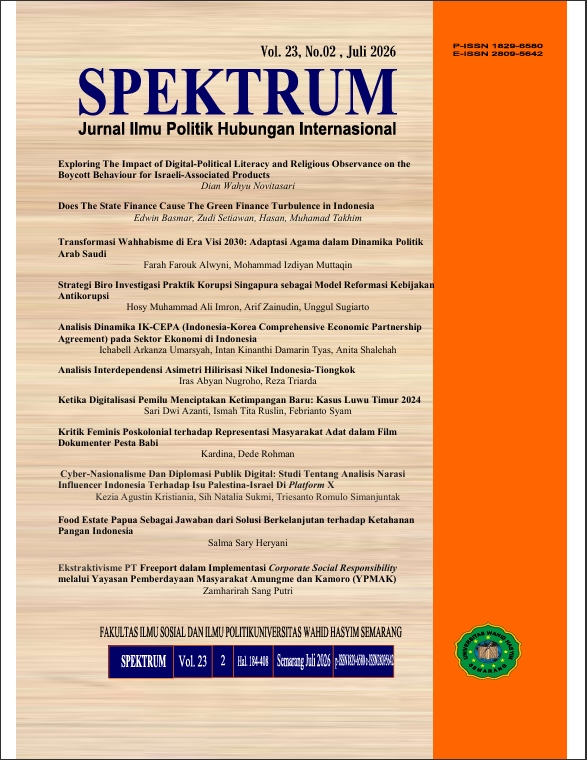
Main Article Content
Abstract
Keywords
Article Details

This work is licensed under a Creative Commons Attribution-ShareAlike 4.0 International License.
References
- Abisono, A. H., Rahmawati, D., & Wijaya, K. (2024). Digital literacy and electoral participation in Indonesia: Challenges and opportunities. Journal of Digital Democracy, 12(3), 245-268.
- Alifia, N., & Sundawa, D. (2022). Implementasi e-voting dalam meningkatkan partisipasi pemilih: Studi kasus di lingkungan kampus. Jurnal Ilmu Politik dan Komunikasi, 12(1), 78-95.
- Birt, L., Scott, S., Cavers, D., Campbell, C., & Walter, F. (2016). Member checking: A tool to enhance trustworthiness or merely a nod to validation? Qualitative Health Research, 26(13), 1802-1811. https://doi.org/10.1177/1049732316654870
- Blank, G., & Lutz, C. (2018). Benefits and harms from Internet use: A differentiated analysis of Great Britain. New Media & Society, 20(2), 618-640. https://doi.org/10.1177/1461444816667135
- Braun, V., & Clarke, V. (2006). Using thematic analysis in psychology. Qualitative Research in Psychology, 3(2), 77-101. https://doi.org/10.1191/1478088706qp063oa
- Crenshaw, K. (1989). Demarginalizing the intersection of race and sex: A Black feminist critique of antidiscrimination doctrine, feminist theory and antiracist politics. University of Chicago Legal Forum, 1989(1), 139-167.
- Creswell, J. W., & Poth, C. N. (2018). Qualitative inquiry and research design: Choosing among five approaches (4th ed.). SAGE Publications.
- Daud, M., Rahman, A., & Kusuma, H. (2022). Infrastructure divide and digital inequality in rural Indonesia. Asian Journal of Communication, 32(4), 312-329.
- Denzin, N. K. (1978). The research act: A theoretical introduction to sociological methods (2nd ed.). McGraw-Hill.
- Flick, U. (2018). Triangulation in data collection. In U. Flick (Ed.), The SAGE handbook of qualitative data collection (pp. 527-544). SAGE Publications.
- Handoko, T., Pratiwi, S., & Nugroho, A. (2023). Media sosial dan polarisasi politik dalam pemilu Indonesia. Jurnal Komunikasi Politik, 15(2), 145-163.
- Hardinata, F., Setiawan, B., & Wulandari, R. (2023). Digital divide in Eastern Indonesia: Implications for democratic participation. Indonesian Journal of Geography, 55(1), 89-107.
- Hargittai, E. (2002). Second-level digital divide: Differences in people's online skills. First Monday, 7(4). https://doi.org/10.5210/fm.v7i4.942
- Hargittai, E. (2010). Digital na(t)ives? Variation in Internet skills and uses among members of the "net generation." Sociological Inquiry, 80(1), 92-113. https://doi.org/10.1111/j.1475-682X.2009.00317.x
- Hargittai, E., & Hinnant, A. (2008). Digital inequality: Differences in young adults' use of the Internet. Communication Research, 35(5), 602-621. https://doi.org/10.1177/0093650208321782
- Helsper, E. J., & Eynon, R. (2013). Distinct skill pathways to digital engagement. European Journal of Communication, 28(6), 696-713. https://doi.org/10.1177/0267323113499113
- Hsieh, H. F., & Shannon, S. E. (2005). Three approaches to qualitative content analysis. Qualitative Health Research, 15(9), 1277-1288. https://doi.org/10.1177/1049732305276687
- Imawan, R. (2023). Platform digital dan pengawasan partisipatif pemilu di Indonesia. Jurnal Politik Indonesia, 8(1), 56-74.
- Khalifah, N., Azhari, M., & Permata, S. (2025). Digital election infrastructure and democratic inequality: An Indonesian perspective. Southeast Asian Studies, 14(1), 23-45.
- Lincoln, Y. S., & Guba, E. G. (1985). Naturalistic inquiry. SAGE Publications.
- Mahpudin, A. (2019). Tantangan implementasi teknologi informasi dalam penyelenggaraan pemilu di Indonesia. Jurnal Administrasi Publik, 10(2), 134-152.
- Miarta, I. N. (2024). Hoaks dan disinformasi dalam pemilu digital: Studi kasus Pilkada 2024. Jurnal Ilmu Komunikasi, 21(1), 89-106.
- Norris, P. (2001). Digital divide: Civic engagement, information poverty, and the Internet worldwide. Cambridge University Press.
- Nurhidayat, S., Wicaksono, P., & Fitriana, A. (2024). Bridging the digital divide: Challenges in rural electoral participation in Indonesia. Journal of Southeast Asian Electoral Studies, 6(2), 178-199.
- Palinkas, L. A., Horwitz, S. M., Green, C. A., Wisdom, J. P., Duan, N., & Hoagwood, K. (2015). Purposeful sampling for qualitative data collection and analysis in mixed method implementation research. Administration and Policy in Mental Health and Mental Health Services Research, 42(5), 533-544. https://doi.org/10.1007/s10488-013-0528-y
- Patton, M. Q. (2015). Qualitative research & evaluation methods: Integrating theory and practice (4th ed.). SAGE Publications.
- Perbawani, A. A., Sobari, W., & Kusumastuti, D. (2018). Dinamika media sosial dalam kontestasi politik lokal di Indonesia. Jurnal Sosial dan Politik, 9(3), 201-219.
- Putu, I. G., Mahendra, K., & Suryani, L. (2024). Data privacy concerns and public trust in digital electoral systems. Indonesian Journal of Public Administration, 18(1), 67-85.
- Reddick, C. G., & Turner, M. (2012). Channel choice and public service delivery in Canada: Comparing e-government to traditional service delivery. Government Information Quarterly, 29(1), 1-11. https://doi.org/10.1016/j.giq.2011.03.005
- Rogers, E. M. (2003). Diffusion of innovations (5th ed.). Free Press.
- Saldaña, J. (2016). The coding manual for qualitative researchers (3rd ed.). SAGE Publications.
- Sari, D. P., Hidayat, R., & Utami, W. (2023). Civic tech platforms and electoral transparency in Indonesia. Digital Government: Research and Practice, 4(2), 112-128.
- Scheerder, A., van Deursen, A., & van Dijk, J. (2017). Determinants of Internet skills, uses and outcomes: A systematic review of the second- and third-level digital divide. Telematics and Informatics, 34(8), 1607-1624. https://doi.org/10.1016/j.tele.2017.07.007
- Schlozman, K. L., Verba, S., & Brady, H. E. (2010). Weapon of the strong? Participatory inequality and the Internet. Perspectives on Politics, 8(2), 487-509. https://doi.org/10.1017/S1537592710001210
- Sen, A. (1999). Development as freedom. Oxford University Press.
- Stake, R. E. (1995). The art of case study research. SAGE Publications.
- Suniadewi, N. P., & Abadi, T. W. (2024). Marginalisasi digital dalam partisipasi politik masyarakat pedesaan. Jurnal Ilmu Pemerintahan, 17(1), 45-63.
- Sustikarini, A. (2020). Platform Kawal Pemilu dan gerakan pengawasan partisipatif di Indonesia. Jurnal Penelitian Politik, 17(2), 167-184.
- Van Deursen, A. J., & Helsper, E. J. (2015). The third-level digital divide: Who benefits most from being online? In L. Robinson, S. R. Cotten, J. Schulz, T. M. Hale, & A. Williams (Eds.), Communication and information technologies annual (pp. 29-52). Emerald Group Publishing.
- Van Dijk, J. A. G. M. (2005). The deepening divide: Inequality in the information society. SAGE Publications.
- Vedel, T. (2006). The idea of electronic democracy: Origins, visions and questions. Parliamentary Affairs, 59(2), 226-235. https://doi.org/10.1093/pa/gsl005
- Vinalti, R., Kurniawan, E., & Saputra, A. (2024). Literasi digital dan partisipasi politik generasi milenial dalam pemilu. Jurnal Studi Pemuda, 13(1), 34-52.
- Wirdyaningsih, S. (2020). Evaluasi implementasi teknologi dalam penyelenggaraan pemilu: Tantangan dan prospek. Jurnal Bawaslu, 6(1), 89-107.
- Yilmaz, R., Chen, Y., & Weiss, A. (2024). Digital exclusion and political participation in developing democracies. International Journal of Politics, Culture, and Society, 37(2), 201-223.
- Yin, R. K. (2018). Case study research and applications: Design and methods (6th ed.). SAGE Publications.
References
Abisono, A. H., Rahmawati, D., & Wijaya, K. (2024). Digital literacy and electoral participation in Indonesia: Challenges and opportunities. Journal of Digital Democracy, 12(3), 245-268.
Alifia, N., & Sundawa, D. (2022). Implementasi e-voting dalam meningkatkan partisipasi pemilih: Studi kasus di lingkungan kampus. Jurnal Ilmu Politik dan Komunikasi, 12(1), 78-95.
Birt, L., Scott, S., Cavers, D., Campbell, C., & Walter, F. (2016). Member checking: A tool to enhance trustworthiness or merely a nod to validation? Qualitative Health Research, 26(13), 1802-1811. https://doi.org/10.1177/1049732316654870
Blank, G., & Lutz, C. (2018). Benefits and harms from Internet use: A differentiated analysis of Great Britain. New Media & Society, 20(2), 618-640. https://doi.org/10.1177/1461444816667135
Braun, V., & Clarke, V. (2006). Using thematic analysis in psychology. Qualitative Research in Psychology, 3(2), 77-101. https://doi.org/10.1191/1478088706qp063oa
Crenshaw, K. (1989). Demarginalizing the intersection of race and sex: A Black feminist critique of antidiscrimination doctrine, feminist theory and antiracist politics. University of Chicago Legal Forum, 1989(1), 139-167.
Creswell, J. W., & Poth, C. N. (2018). Qualitative inquiry and research design: Choosing among five approaches (4th ed.). SAGE Publications.
Daud, M., Rahman, A., & Kusuma, H. (2022). Infrastructure divide and digital inequality in rural Indonesia. Asian Journal of Communication, 32(4), 312-329.
Denzin, N. K. (1978). The research act: A theoretical introduction to sociological methods (2nd ed.). McGraw-Hill.
Flick, U. (2018). Triangulation in data collection. In U. Flick (Ed.), The SAGE handbook of qualitative data collection (pp. 527-544). SAGE Publications.
Handoko, T., Pratiwi, S., & Nugroho, A. (2023). Media sosial dan polarisasi politik dalam pemilu Indonesia. Jurnal Komunikasi Politik, 15(2), 145-163.
Hardinata, F., Setiawan, B., & Wulandari, R. (2023). Digital divide in Eastern Indonesia: Implications for democratic participation. Indonesian Journal of Geography, 55(1), 89-107.
Hargittai, E. (2002). Second-level digital divide: Differences in people's online skills. First Monday, 7(4). https://doi.org/10.5210/fm.v7i4.942
Hargittai, E. (2010). Digital na(t)ives? Variation in Internet skills and uses among members of the "net generation." Sociological Inquiry, 80(1), 92-113. https://doi.org/10.1111/j.1475-682X.2009.00317.x
Hargittai, E., & Hinnant, A. (2008). Digital inequality: Differences in young adults' use of the Internet. Communication Research, 35(5), 602-621. https://doi.org/10.1177/0093650208321782
Helsper, E. J., & Eynon, R. (2013). Distinct skill pathways to digital engagement. European Journal of Communication, 28(6), 696-713. https://doi.org/10.1177/0267323113499113
Hsieh, H. F., & Shannon, S. E. (2005). Three approaches to qualitative content analysis. Qualitative Health Research, 15(9), 1277-1288. https://doi.org/10.1177/1049732305276687
Imawan, R. (2023). Platform digital dan pengawasan partisipatif pemilu di Indonesia. Jurnal Politik Indonesia, 8(1), 56-74.
Khalifah, N., Azhari, M., & Permata, S. (2025). Digital election infrastructure and democratic inequality: An Indonesian perspective. Southeast Asian Studies, 14(1), 23-45.
Lincoln, Y. S., & Guba, E. G. (1985). Naturalistic inquiry. SAGE Publications.
Mahpudin, A. (2019). Tantangan implementasi teknologi informasi dalam penyelenggaraan pemilu di Indonesia. Jurnal Administrasi Publik, 10(2), 134-152.
Miarta, I. N. (2024). Hoaks dan disinformasi dalam pemilu digital: Studi kasus Pilkada 2024. Jurnal Ilmu Komunikasi, 21(1), 89-106.
Norris, P. (2001). Digital divide: Civic engagement, information poverty, and the Internet worldwide. Cambridge University Press.
Nurhidayat, S., Wicaksono, P., & Fitriana, A. (2024). Bridging the digital divide: Challenges in rural electoral participation in Indonesia. Journal of Southeast Asian Electoral Studies, 6(2), 178-199.
Palinkas, L. A., Horwitz, S. M., Green, C. A., Wisdom, J. P., Duan, N., & Hoagwood, K. (2015). Purposeful sampling for qualitative data collection and analysis in mixed method implementation research. Administration and Policy in Mental Health and Mental Health Services Research, 42(5), 533-544. https://doi.org/10.1007/s10488-013-0528-y
Patton, M. Q. (2015). Qualitative research & evaluation methods: Integrating theory and practice (4th ed.). SAGE Publications.
Perbawani, A. A., Sobari, W., & Kusumastuti, D. (2018). Dinamika media sosial dalam kontestasi politik lokal di Indonesia. Jurnal Sosial dan Politik, 9(3), 201-219.
Putu, I. G., Mahendra, K., & Suryani, L. (2024). Data privacy concerns and public trust in digital electoral systems. Indonesian Journal of Public Administration, 18(1), 67-85.
Reddick, C. G., & Turner, M. (2012). Channel choice and public service delivery in Canada: Comparing e-government to traditional service delivery. Government Information Quarterly, 29(1), 1-11. https://doi.org/10.1016/j.giq.2011.03.005
Rogers, E. M. (2003). Diffusion of innovations (5th ed.). Free Press.
Saldaña, J. (2016). The coding manual for qualitative researchers (3rd ed.). SAGE Publications.
Sari, D. P., Hidayat, R., & Utami, W. (2023). Civic tech platforms and electoral transparency in Indonesia. Digital Government: Research and Practice, 4(2), 112-128.
Scheerder, A., van Deursen, A., & van Dijk, J. (2017). Determinants of Internet skills, uses and outcomes: A systematic review of the second- and third-level digital divide. Telematics and Informatics, 34(8), 1607-1624. https://doi.org/10.1016/j.tele.2017.07.007
Schlozman, K. L., Verba, S., & Brady, H. E. (2010). Weapon of the strong? Participatory inequality and the Internet. Perspectives on Politics, 8(2), 487-509. https://doi.org/10.1017/S1537592710001210
Sen, A. (1999). Development as freedom. Oxford University Press.
Stake, R. E. (1995). The art of case study research. SAGE Publications.
Suniadewi, N. P., & Abadi, T. W. (2024). Marginalisasi digital dalam partisipasi politik masyarakat pedesaan. Jurnal Ilmu Pemerintahan, 17(1), 45-63.
Sustikarini, A. (2020). Platform Kawal Pemilu dan gerakan pengawasan partisipatif di Indonesia. Jurnal Penelitian Politik, 17(2), 167-184.
Van Deursen, A. J., & Helsper, E. J. (2015). The third-level digital divide: Who benefits most from being online? In L. Robinson, S. R. Cotten, J. Schulz, T. M. Hale, & A. Williams (Eds.), Communication and information technologies annual (pp. 29-52). Emerald Group Publishing.
Van Dijk, J. A. G. M. (2005). The deepening divide: Inequality in the information society. SAGE Publications.
Vedel, T. (2006). The idea of electronic democracy: Origins, visions and questions. Parliamentary Affairs, 59(2), 226-235. https://doi.org/10.1093/pa/gsl005
Vinalti, R., Kurniawan, E., & Saputra, A. (2024). Literasi digital dan partisipasi politik generasi milenial dalam pemilu. Jurnal Studi Pemuda, 13(1), 34-52.
Wirdyaningsih, S. (2020). Evaluasi implementasi teknologi dalam penyelenggaraan pemilu: Tantangan dan prospek. Jurnal Bawaslu, 6(1), 89-107.
Yilmaz, R., Chen, Y., & Weiss, A. (2024). Digital exclusion and political participation in developing democracies. International Journal of Politics, Culture, and Society, 37(2), 201-223.
Yin, R. K. (2018). Case study research and applications: Design and methods (6th ed.). SAGE Publications.