Article Sidebar
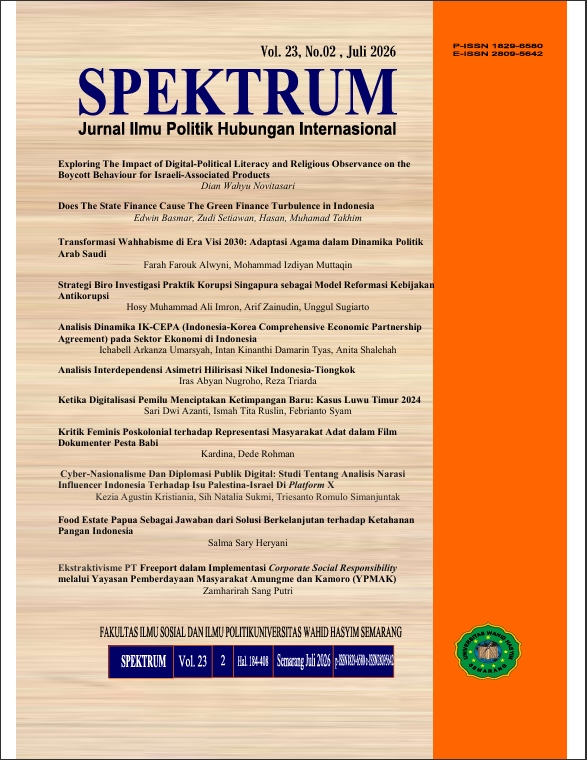
Main Article Content
Abstract
The realisation of the food estate is still causing polemics regarding its adverse impacts. The food estate is believed to be a project that will succeed in maintaining national resilience, but it has a negative impact on local communities. Papua was targeted after other areas were believed to have failed, but the government seems confident that the contribution of food estate in Papua can overcome Indonesia's food security problems. This article looks at the extent to which the Food Estate in Papua can contribute to the country being able to fulfil domestic needs from its own production of staple food commodities. The findings indicate that the Food Estate in Papua is not a solution to food‑security challenges. rather, it is an instrument that can make a genuine contribution only if its governance is fundamentally redesigned. The Food Estate in Papua is not the sole alternative for resolving food‑security issues; it is an instrument that can contribute meaningfully only when its governance is re‑engineered. A holistic and sustainable approach is required. Without such an approach, the Food Estate in Papua risks repeating the failures of previous projects, in which large‑scale schemes and short‑term production targets compromised social and environmental stability and the rights of local communities.
Keywords
Article Details

This work is licensed under a Creative Commons Attribution-ShareAlike 4.0 International License.
References
- Abay, K. A., Breisinger, C., Glauber, J., Kurdi, S., Laborde, D., & Siddig, K. (2023). The Russia--Ukraine war: Implications for global and regional food security and potential policy responses. Global Food Security, 36, 100675. https://doi.org/10.1016/j.gfs.2023.100675
- An Introduction to the Basic Concepts of Food Security. (2008).
- Aprila, D., Andriani, W., & Ananto, R. P. (2023). Financial Management of Nagari Owned Enterprises (BUMNAG) and Its Impact on Community Welfare. Jurnal Akuntansi Bisnis, 16(2), 210–225. https://doi.org/10.30813/jab.v16i2.4461
- Bryman, A. (2012). Social Research Methods. Oxford University Press.
- Christawan, E., Perwita, A. A. B., Midhio, I. W., Hendra, A., & Sumertha, I. G. (2023). Papua as the Window of Indonesia’s Spirit for the Melanesian Communities. Journal of Social and Political Sciences, 6(3), 15–72. https://doi.org/10.31014/aior.1991.06.03.426
- Clapp, J. (2017). Food Self-Sufficiency: Making Sense of It, and When It Makes Sense. Food Policy, 66, 88–96. https://doi.org/10.1016/j.foodpol.2016.12.001
- Clapp, J., Moseley, W. G., Burlingame, B., & Termine, P. (2022). Viewpoint: The case for a six-dimensional food security framework. Food Policy, 106, 102164. https://doi.org/10.1016/j.foodpol.2021.102164
- Committee on Commodity Problems. (2022). https://www.fao.org
- FAO Food Price Index. (2025). https://www.fao.org/worldfoodsituation/foodpricesindex
- Food and Agriculture Organization of the United Nations. (2010). The State of Food Security in the World: Addressing Food Insecurity in Protracted Crises. FAO.
- Global Hunger Index. (2025). https://www.globalhungerindex.org
- Hanggarini, P., & Perwita, A. A. B. (2024). Changes and Implications of Australia’s Foreign and Defense Policy. Journal of Indo-Pacific Affairs, 7(6), 117–126. https://www.airuniversity.af.edu/JIPA/.
- Hilmi, M. A. (2024). Food Estate: Ancaman atau Peluang bagi Ketahanan Pangan Indonesia? Jurnal Ekonomi Pertanian Dan Agribisnis, 8, 1313–1326. https://doi.org/10.21776/ub.jepa.2024.008.04.7
- Kurniawan, F. E. (2020). Analisis Faktor dan Pemetaan Ketahanan Pangan Provinsi Papua dalam Upaya Mendukung Sustainable Development Goals di Indonesia. https://www.researchgate.net
- Mardianto, S. P., Saliem, H. P., & Rachman, B. (2014). Strategi Pemantapan Swasembada Beras Berkelanjutan.
- Neuman, W. L. (2014). Social Research Methods: Qualitative and Quantitative Approaches. Pearson.
- Partini, & Sari, I. (2022). Kebijakan Pengembangan Ketahanan Pangan Lokal. Jurnal Agribisnis Unisi, 11(1).
- Pecamuya, R. (2025). Dampak Kebijakan Lumbung Pangan Nasional terhadap Ketahanan Pangan Lokal: Perspektif Masyarakat Adat Merauke. RIGGS, 4(1), 74–80. https://doi.org/10.31004/riggs.v4i1.374
- Rikardus, E. (2025). Ketahanan Pangan dan Hak Akses Lahan bagi Masyarakat Adat di Merauke. RIGGS, 4(1), 81–88. https://doi.org/10.31004/riggs.v4i1.375
- Salsabila, W., Apriwan, A., & Dermawan, R. (2024). Upaya Indonesia Menanggulangi IUU Fishing di Laut Arafura-Timor Melalui “Arafura And Timor Seas Ecosystem Action.” Palito, 3(02), 263–280. https://doi.org/10.25077/palito.v3i02.225
- Simamora, B., Lubis, K., & Arini, H. (2021). Analisis Asumsi-Asumsi pada Program Food Estate di Papua. Perspektif, 10(2), 293–300. https://doi.org/10.31289/perspektif.v10i2.4267
- Szajner, P., Szczepaniak, I., & Lopaciuk, W. (2024). An Assessment of the Production Potential and Food Self-Sufficiency of Ukraine. Sustainability, 16(17), 7735. https://doi.org/10.3390/su16177735
- Timmer, C. P. (2010). Reflections on food crises past. Food Policy, 35(1), 1–11. https://doi.org/10.1016/j.foodpol.2009.09.002
- Werastuti, D. N. S., Siskawati, E., Rachmawati, L., Sondakh, J. J., Widiastuti, R., & Paranoan, S. (2022). Determining the Quality of Social Responsibility Disclosures: a Study of the Feminist Ethical Theory. ABAC Journal, 42(4), 202–217. https://doi.org/10.14456/abacj.2022.61
References
Abay, K. A., Breisinger, C., Glauber, J., Kurdi, S., Laborde, D., & Siddig, K. (2023). The Russia--Ukraine war: Implications for global and regional food security and potential policy responses. Global Food Security, 36, 100675. https://doi.org/10.1016/j.gfs.2023.100675
An Introduction to the Basic Concepts of Food Security. (2008).
Aprila, D., Andriani, W., & Ananto, R. P. (2023). Financial Management of Nagari Owned Enterprises (BUMNAG) and Its Impact on Community Welfare. Jurnal Akuntansi Bisnis, 16(2), 210–225. https://doi.org/10.30813/jab.v16i2.4461
Bryman, A. (2012). Social Research Methods. Oxford University Press.
Christawan, E., Perwita, A. A. B., Midhio, I. W., Hendra, A., & Sumertha, I. G. (2023). Papua as the Window of Indonesia’s Spirit for the Melanesian Communities. Journal of Social and Political Sciences, 6(3), 15–72. https://doi.org/10.31014/aior.1991.06.03.426
Clapp, J. (2017). Food Self-Sufficiency: Making Sense of It, and When It Makes Sense. Food Policy, 66, 88–96. https://doi.org/10.1016/j.foodpol.2016.12.001
Clapp, J., Moseley, W. G., Burlingame, B., & Termine, P. (2022). Viewpoint: The case for a six-dimensional food security framework. Food Policy, 106, 102164. https://doi.org/10.1016/j.foodpol.2021.102164
Committee on Commodity Problems. (2022). https://www.fao.org
FAO Food Price Index. (2025). https://www.fao.org/worldfoodsituation/foodpricesindex
Food and Agriculture Organization of the United Nations. (2010). The State of Food Security in the World: Addressing Food Insecurity in Protracted Crises. FAO.
Global Hunger Index. (2025). https://www.globalhungerindex.org
Hanggarini, P., & Perwita, A. A. B. (2024). Changes and Implications of Australia’s Foreign and Defense Policy. Journal of Indo-Pacific Affairs, 7(6), 117–126. https://www.airuniversity.af.edu/JIPA/.
Hilmi, M. A. (2024). Food Estate: Ancaman atau Peluang bagi Ketahanan Pangan Indonesia? Jurnal Ekonomi Pertanian Dan Agribisnis, 8, 1313–1326. https://doi.org/10.21776/ub.jepa.2024.008.04.7
Kurniawan, F. E. (2020). Analisis Faktor dan Pemetaan Ketahanan Pangan Provinsi Papua dalam Upaya Mendukung Sustainable Development Goals di Indonesia. https://www.researchgate.net
Mardianto, S. P., Saliem, H. P., & Rachman, B. (2014). Strategi Pemantapan Swasembada Beras Berkelanjutan.
Neuman, W. L. (2014). Social Research Methods: Qualitative and Quantitative Approaches. Pearson.
Partini, & Sari, I. (2022). Kebijakan Pengembangan Ketahanan Pangan Lokal. Jurnal Agribisnis Unisi, 11(1).
Pecamuya, R. (2025). Dampak Kebijakan Lumbung Pangan Nasional terhadap Ketahanan Pangan Lokal: Perspektif Masyarakat Adat Merauke. RIGGS, 4(1), 74–80. https://doi.org/10.31004/riggs.v4i1.374
Rikardus, E. (2025). Ketahanan Pangan dan Hak Akses Lahan bagi Masyarakat Adat di Merauke. RIGGS, 4(1), 81–88. https://doi.org/10.31004/riggs.v4i1.375
Salsabila, W., Apriwan, A., & Dermawan, R. (2024). Upaya Indonesia Menanggulangi IUU Fishing di Laut Arafura-Timor Melalui “Arafura And Timor Seas Ecosystem Action.” Palito, 3(02), 263–280. https://doi.org/10.25077/palito.v3i02.225
Simamora, B., Lubis, K., & Arini, H. (2021). Analisis Asumsi-Asumsi pada Program Food Estate di Papua. Perspektif, 10(2), 293–300. https://doi.org/10.31289/perspektif.v10i2.4267
Szajner, P., Szczepaniak, I., & Lopaciuk, W. (2024). An Assessment of the Production Potential and Food Self-Sufficiency of Ukraine. Sustainability, 16(17), 7735. https://doi.org/10.3390/su16177735
Timmer, C. P. (2010). Reflections on food crises past. Food Policy, 35(1), 1–11. https://doi.org/10.1016/j.foodpol.2009.09.002
Werastuti, D. N. S., Siskawati, E., Rachmawati, L., Sondakh, J. J., Widiastuti, R., & Paranoan, S. (2022). Determining the Quality of Social Responsibility Disclosures: a Study of the Feminist Ethical Theory. ABAC Journal, 42(4), 202–217. https://doi.org/10.14456/abacj.2022.61