Article Sidebar
Main Article Content
Abstract
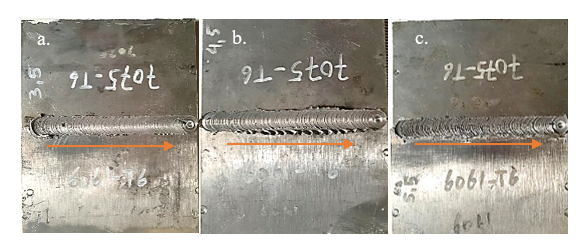
Friction Stir Welding (FSW) is a solid-state welding method that utilizes the heat generated from the friction between the rotating pin and the parent material, so that it is able to produce a good connection without involving the metal melting process. This method is considered very suitable to be applied to aluminum material welding, including dissimilar welding between two different types of alloys. This research aims to analyze the effect of pin depth variation on the mechanical properties of FSW dissimilar material AA7075-T6 and AA6061-T6 using a threaded tapered pin with a shoulder angle of 0°. The pin depth variation used is 3.5 mm, 4.5 mm, and 5.5 mm, with the implementation of tensile testing referring to the ASTM E8 standard. The test results showed that the pin depth of 4.5 mm produced the highest tensile strength of 156,197 N/mm² and yield strength of 152,010 N/mm², while the depth of the pin of 5.5 mm produced the highest strain value of 3,927%, which indicates the best level of ductility among the three variations tested.
Keywords
Article Details

This work is licensed under a Creative Commons Attribution 4.0 International License.
References
- ASTM E8. (2010). ASTM E8/E8M standard test methods for tension testing of metallic materials 1. Annual Book of ASTM Standards 4, (C), 1–27. https://doi.org/10.1520/E0008
- Callister, W. D., & Retwisch, D. G. (2018). Materials Science and Engineering, an Introduction. Dalam A. Alecci (Ed.), WILLEY (10 ed., Vol. 10, Nomor 10). WILLEY. https://doi.org/10.1177/030641909402200102
- FSW-TECH ERASMUS. (2017). Friction Stir Welding Handbook. Dalam Erasmus+. http://www.fsw-tech.eu/
- Kumar Jha, K., Kesharwani, R., & Imam, M. (2022). Microstructural and micro-hardness study on the fabricated Al 5083-O/6061-T6/7075-T6 gradient composite component via a novel route of friction stir additive manufacturing. Materials Today: Proceedings, 56, 819–825. https://doi.org/10.1016/j.matpr.2022.02.262
- Priyahapsara, I., & Mulyani, S. (2020). Analisis Kualitas Sambungan Alumunium 2024 Menggunakan Metode Friction Stir Welding (FSW) Dengan Variasi Kekerasan Material Pin. Conference SENATIK STT Adisutjipto Yogyakarta, 6(986), 99–106. https://doi.org/10.28989/senatik.v6i0.400
- Rahmat, D. A., & Naubnome, V. (2024). Pengaruh Feed Rate Terhadap Uji Kekerasan, Uji Tarik dan Mikro Struktur Pada Alumunium 6061 dengan Metode Friction Stir Welding. Junral Serambi Engineering, IX(3), 10034–10041.
- Rio wahyu Prabowo, Sarjito Jokosisworo, B. A. A. (2019). Aluminium 6061 Hasil Pengelasan Double Sided. JURNAL TEKNIK PERKAPALAN, 7(4), 294–302. https://ejournal3.undip.ac.id/index.php/naval ISSN
- Septiawan, D. R., Wijoyo, W., Nugroho, A. W., & Shaleh, M. A. (2023). Pengaruh Variasi Bentuk Pin pada Friction Stir Welding terhadap Sifat Mekanik Sambungan Las Beda Materail antara Al 6061 – Al 5083. Creative Research in Engineering (CERIE), 3(2), 93. https://doi.org/10.30595/cerie.v3i2.17522
- Sukmana, I., Favian Gustin, H., & . T. (2022). Pengaruh kedalaman las pada pengelasan gesek puntir dua muka logam Magnesium AZ31. Jurnal Energi Dan Manufaktur, 14(1), 10. https://doi.org/10.24843/jem.2021.v14.i01.p02
- Sumarno, D. P., & Ilman, M. N. (2025). Microstructures and mechanical properties of friction stir dissimilar AA2024-O/AA6061-T6 welded joints at varying tool rotational speeds. Mechanical Engineering for Society and Industry, 5(1), 268–275. https://doi.org/10.31603/mesi.13499
- TWI. (2020). Functions, designs and materials of Friction Stir Welding tools. TWI. https://www.twi-global.com/technical-knowledge/faqs/friction-stir-welding-tools
References
ASTM E8. (2010). ASTM E8/E8M standard test methods for tension testing of metallic materials 1. Annual Book of ASTM Standards 4, (C), 1–27. https://doi.org/10.1520/E0008
Callister, W. D., & Retwisch, D. G. (2018). Materials Science and Engineering, an Introduction. Dalam A. Alecci (Ed.), WILLEY (10 ed., Vol. 10, Nomor 10). WILLEY. https://doi.org/10.1177/030641909402200102
FSW-TECH ERASMUS. (2017). Friction Stir Welding Handbook. Dalam Erasmus+. http://www.fsw-tech.eu/
Kumar Jha, K., Kesharwani, R., & Imam, M. (2022). Microstructural and micro-hardness study on the fabricated Al 5083-O/6061-T6/7075-T6 gradient composite component via a novel route of friction stir additive manufacturing. Materials Today: Proceedings, 56, 819–825. https://doi.org/10.1016/j.matpr.2022.02.262
Priyahapsara, I., & Mulyani, S. (2020). Analisis Kualitas Sambungan Alumunium 2024 Menggunakan Metode Friction Stir Welding (FSW) Dengan Variasi Kekerasan Material Pin. Conference SENATIK STT Adisutjipto Yogyakarta, 6(986), 99–106. https://doi.org/10.28989/senatik.v6i0.400
Rahmat, D. A., & Naubnome, V. (2024). Pengaruh Feed Rate Terhadap Uji Kekerasan, Uji Tarik dan Mikro Struktur Pada Alumunium 6061 dengan Metode Friction Stir Welding. Junral Serambi Engineering, IX(3), 10034–10041.
Rio wahyu Prabowo, Sarjito Jokosisworo, B. A. A. (2019). Aluminium 6061 Hasil Pengelasan Double Sided. JURNAL TEKNIK PERKAPALAN, 7(4), 294–302. https://ejournal3.undip.ac.id/index.php/naval ISSN
Septiawan, D. R., Wijoyo, W., Nugroho, A. W., & Shaleh, M. A. (2023). Pengaruh Variasi Bentuk Pin pada Friction Stir Welding terhadap Sifat Mekanik Sambungan Las Beda Materail antara Al 6061 – Al 5083. Creative Research in Engineering (CERIE), 3(2), 93. https://doi.org/10.30595/cerie.v3i2.17522
Sukmana, I., Favian Gustin, H., & . T. (2022). Pengaruh kedalaman las pada pengelasan gesek puntir dua muka logam Magnesium AZ31. Jurnal Energi Dan Manufaktur, 14(1), 10. https://doi.org/10.24843/jem.2021.v14.i01.p02
Sumarno, D. P., & Ilman, M. N. (2025). Microstructures and mechanical properties of friction stir dissimilar AA2024-O/AA6061-T6 welded joints at varying tool rotational speeds. Mechanical Engineering for Society and Industry, 5(1), 268–275. https://doi.org/10.31603/mesi.13499
TWI. (2020). Functions, designs and materials of Friction Stir Welding tools. TWI. https://www.twi-global.com/technical-knowledge/faqs/friction-stir-welding-tools