Article Sidebar
Main Article Content
Abstract
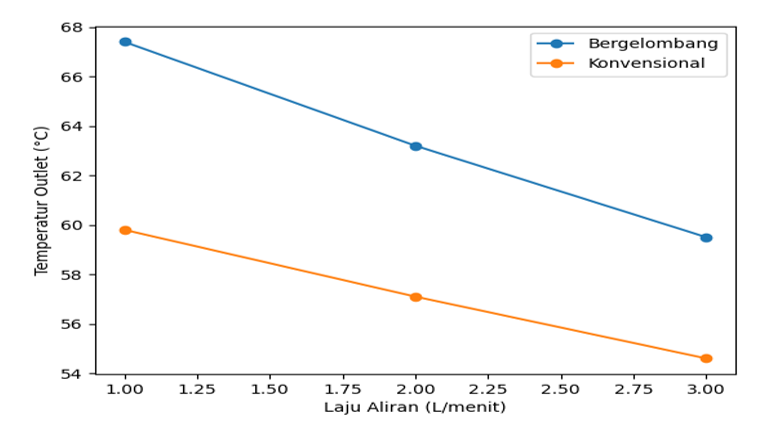
Penelitian ini bertujuan untuk merancang dan mengevaluasi performa termal kolektor surya plat datar dengan absorber bergelombang untuk aplikasi pemanasan air domestik di iklim tropis. Latar belakang penelitian ini didasarkan pada tingginya konsumsi energi rumah tangga untuk pemanasan air serta belum optimalnya pemanfaatan energi surya di Indonesia. Metode yang digunakan adalah pendekatan eksperimental melalui perancangan, fabrikasi, dan pengujian kolektor berukuran 2 m² dengan variasi laju aliran fluida sebesar 1,0; 2,0; dan 3,0 L/menit pada kondisi radiasi surya aktual. Parameter performa yang dianalisis meliputi laju panas berguna (Qu) dan efisiensi termal (η). Hasil penelitian menunjukkan bahwa kolektor dengan absorber bergelombang mampu meningkatkan performa dibandingkan kolektor konvensional. Efisiensi termal maksimum yang dicapai sebesar 75,8% pada laju aliran 3,0 L/menit, dengan peningkatan efisiensi sekitar 25,5% dibandingkan absorber datar. Laju panas berguna meningkat hingga 26,3%, yang menunjukkan efektivitas geometri bergelombang dalam meningkatkan perpindahan panas akibat peningkatan luas permukaan dan turbulensi aliran. Selain itu, sistem mampu menghasilkan energi panas rata-rata sebesar 7,2 kWh/hari, yang cukup untuk memenuhi kebutuhan air panas domestik dan berpotensi menghemat energi listrik hingga 1.898 kWh/tahun. Penelitian ini menunjukkan bahwa kolektor surya plat datar bergelombang merupakan solusi yang efisien, ramah lingkungan, dan aplikatif untuk pemanasan air domestik di wilayah tropis. Hasil ini memberikan kontribusi penting berupa data empiris dan rekomendasi desain yang dapat digunakan dalam pengembangan teknologi energi terbarukan berbasis surya di Indonesia.
Keywords
Article Details

This work is licensed under a Creative Commons Attribution 4.0 International License.
References
- Duffie, J.A. and Beckman, W.A., (2013), Solar Engineering of Thermal Processes, 4th Ed., John Wiley & Sons, New York.
- El-Sebaii, A.A., Aboul-Enein, S., Ramadan, M.R.I., Shalaby, S.M., and Moharram, B.M., (2011), Investigation of Thermal Performance of Double Pass Flat and V-Corrugated Plate Solar Air Heaters, Energy, 36(2), pp. 1076–1086.
- Handayani, N.A. and Ariyanti, D., (2012), Potency of Solar Energy Applications in Indonesia, International Journal of Renewable Energy Development, 1(2), pp. 33–38.
- International Energy Agency., (2022), World Energy Outlook 2022, IEA, Paris.
- Kabeel, A.E., Khalil, A., Shalaby, S.M., and Zayed, M.E., (2016), Experimental Investigation of Thermal Performance of Flat and V-Corrugated Plate Solar Air Heaters with and without PCM as Thermal Energy Storage, Energy Conversion and Management, 113, pp. 264–272.
- Kementerian Energi dan Sumber Daya Mineral., (2021), Handbook of Energy & Economic Statistics of Indonesia 2021, KESDM, Jakarta.
- Kumar, A. and Kim, M.H., (2015), Effect of Roughness Width Ratios in Discrete Multi V-Rib with Staggered Rib Roughness on Overall Thermal Performance of Solar Air Channel, Solar Energy, 119, pp. 399–414.
- Mekhilef, S., Saidur, R., and Kamalisarvestani, M., (2011), Effect of Dust, Humidity and Air Velocity on Efficiency of Photovoltaic Cells, Renewable and Sustainable Energy Reviews, 16(5), pp. 2920–2925.
- Naphon, P., (2008), Effect of Corrugated Plates in an In-Phase Arrangement on the Heat Transfer Characteristics in Wavy Surface Miniature Heat Exchanger, International Journal of Heat and Mass Transfer, 51(15-16), pp. 3963–3971.
- Sopian, K., Alghoul, M.A., Alfegi, E.M., Sulaiman, M.Y., and Musa, E.A., (2009), Evaluation of Thermal Efficiency of Double-Pass Solar Collector with Porous–Non Porous Media, Renewable Energy, 34(3), pp. 640–645.
References
Duffie, J.A. and Beckman, W.A., (2013), Solar Engineering of Thermal Processes, 4th Ed., John Wiley & Sons, New York.
El-Sebaii, A.A., Aboul-Enein, S., Ramadan, M.R.I., Shalaby, S.M., and Moharram, B.M., (2011), Investigation of Thermal Performance of Double Pass Flat and V-Corrugated Plate Solar Air Heaters, Energy, 36(2), pp. 1076–1086.
Handayani, N.A. and Ariyanti, D., (2012), Potency of Solar Energy Applications in Indonesia, International Journal of Renewable Energy Development, 1(2), pp. 33–38.
International Energy Agency., (2022), World Energy Outlook 2022, IEA, Paris.
Kabeel, A.E., Khalil, A., Shalaby, S.M., and Zayed, M.E., (2016), Experimental Investigation of Thermal Performance of Flat and V-Corrugated Plate Solar Air Heaters with and without PCM as Thermal Energy Storage, Energy Conversion and Management, 113, pp. 264–272.
Kementerian Energi dan Sumber Daya Mineral., (2021), Handbook of Energy & Economic Statistics of Indonesia 2021, KESDM, Jakarta.
Kumar, A. and Kim, M.H., (2015), Effect of Roughness Width Ratios in Discrete Multi V-Rib with Staggered Rib Roughness on Overall Thermal Performance of Solar Air Channel, Solar Energy, 119, pp. 399–414.
Mekhilef, S., Saidur, R., and Kamalisarvestani, M., (2011), Effect of Dust, Humidity and Air Velocity on Efficiency of Photovoltaic Cells, Renewable and Sustainable Energy Reviews, 16(5), pp. 2920–2925.
Naphon, P., (2008), Effect of Corrugated Plates in an In-Phase Arrangement on the Heat Transfer Characteristics in Wavy Surface Miniature Heat Exchanger, International Journal of Heat and Mass Transfer, 51(15-16), pp. 3963–3971.
Sopian, K., Alghoul, M.A., Alfegi, E.M., Sulaiman, M.Y., and Musa, E.A., (2009), Evaluation of Thermal Efficiency of Double-Pass Solar Collector with Porous–Non Porous Media, Renewable Energy, 34(3), pp. 640–645.