Article Sidebar
Main Article Content
Abstract
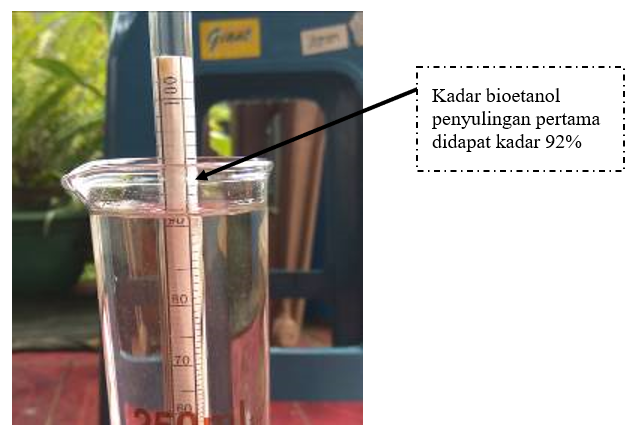
Bioethanol is an alcohol produced from plants using microorganisms through a fermentation process. Bioethanol itself is an attractive alternative energy source to develop because it is reported in Indonesia and is renewable. Currently, ethanol is widely used. In addition to being used as a fuel mixture, ethanol is also used in the industrial world as a solvent and as a raw material for other chemical industries, such as the production of ethyl acetate. Therefore, bioethanol may be a potential alternative fuel, and much research is being conducted to develop this fuel. This research aims to produce bioethanol fuel grade (FGE) from cassava raw materials through fermentation, distillation, and dehydration using zeolite synthesis. Cassava raw materials were chosen because of their high starch content and abundant availability in Indonesia. The research process included material preparation, fermentation with yeast, distillation at 78°C, and purification through dehydration. The results showed that the ethanol content of the distillate reached 92–95%, and after the dehydration process increased to 99.8%, meeting Fuel Grade Ethanol (FGE) standards. The use of synthetic zeolite has proven to be efficient, environmentally friendly, and regenerable. These results support efforts to develop sustainable renewable energy and reduce dependence on fossil fuels.
Keywords
Article Details

This work is licensed under a Creative Commons Attribution 4.0 International License.
References
- Amri, I. (2007). Dilema Biofuel Sebagai Sumber Energi Alternatif. Edisi Pertama. Kuala Lumpur.
- Balat, M., & Balat, H. (2009). Recent trends in global production and utilization of bio-ethanol fuel. Applied Energy. Vol 86. No.2. Pages 2273–2282.
- Barakat, Y., Awad, E.N., & Ibrahim, V. (2016). Fuel consumption of gasoline ethanol blend at different engine rotational speeds. Egyptian Journal of Petroleum. Elsevier. Vol 25. Pages 309-315.
- Firdausi, N.Z., Samodra, N.B., & Hargono. (2013). Pemanfaatan pati singkong karet untuk produksi bioetanol fuel grade melalui distilasi-dehidrasi menggunakan zeolit alam. Jurnal Teknologi Kimia dan Industri, 2(3): 125–132.
- Isvandiary, S., & Amaria. (2020). Pemanfaatan Zeolit Alam untuk Meningkatkan Kemurnian Bioetanol dari Singkong. Unesa Journal of Chemistry, 9(2): 106–113.
- Lovisia, Endang. (2022). “Bioetanol dari Singkong sebagai Sumber Energi Alternatif.” Science, and Physics Education Journal (SPEJ) 6(1):8–14.
- Muttaqin, Arif Syaiful, Syarifudin, dan Aldi Budi Riyanta. (2020). “Pembuatan Bio Ethanol Dari Singkong Sebagai Alternatif Bahan Bakar Mesin Bensin.” Politeknik Harapan Bersama Tegal.
- Prasetyo, I., Sarjito, & Effendy, M. (2018). Analisa Performa Mesin dan Kadar Emisi Gas Buang Kendaraan Bermotor Dengan Memanfaatkan Bioetanol dari Bahan Baku Singkong Sebagai Bahan Bakat Alternatif Campuran Pertalite. In Media Mesin: Majalah Teknik Mesin (Vol. 12, Nomor 2, hal. 43–54).
References
Amri, I. (2007). Dilema Biofuel Sebagai Sumber Energi Alternatif. Edisi Pertama. Kuala Lumpur.
Balat, M., & Balat, H. (2009). Recent trends in global production and utilization of bio-ethanol fuel. Applied Energy. Vol 86. No.2. Pages 2273–2282.
Barakat, Y., Awad, E.N., & Ibrahim, V. (2016). Fuel consumption of gasoline ethanol blend at different engine rotational speeds. Egyptian Journal of Petroleum. Elsevier. Vol 25. Pages 309-315.
Firdausi, N.Z., Samodra, N.B., & Hargono. (2013). Pemanfaatan pati singkong karet untuk produksi bioetanol fuel grade melalui distilasi-dehidrasi menggunakan zeolit alam. Jurnal Teknologi Kimia dan Industri, 2(3): 125–132.
Isvandiary, S., & Amaria. (2020). Pemanfaatan Zeolit Alam untuk Meningkatkan Kemurnian Bioetanol dari Singkong. Unesa Journal of Chemistry, 9(2): 106–113.
Lovisia, Endang. (2022). “Bioetanol dari Singkong sebagai Sumber Energi Alternatif.” Science, and Physics Education Journal (SPEJ) 6(1):8–14.
Muttaqin, Arif Syaiful, Syarifudin, dan Aldi Budi Riyanta. (2020). “Pembuatan Bio Ethanol Dari Singkong Sebagai Alternatif Bahan Bakar Mesin Bensin.” Politeknik Harapan Bersama Tegal.
Prasetyo, I., Sarjito, & Effendy, M. (2018). Analisa Performa Mesin dan Kadar Emisi Gas Buang Kendaraan Bermotor Dengan Memanfaatkan Bioetanol dari Bahan Baku Singkong Sebagai Bahan Bakat Alternatif Campuran Pertalite. In Media Mesin: Majalah Teknik Mesin (Vol. 12, Nomor 2, hal. 43–54).