Article Sidebar
Main Article Content
Abstract
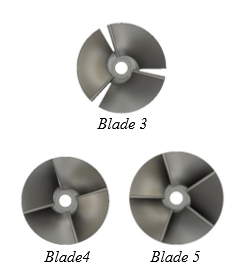
Waterjet thruster merupakan sistem penggerak sebuah perahu yang menghasilkan daya dorong sebagai pengganti baling-baling yang konvensional. Waterjet thruster memiliki impeller sebagai pendorong utama untuk menggerakakan perahu diperairan, Dalam penelitian ini akan dilakukan pengujian prototype waterjet thruster dengan diameter 1 inch dengan variasi jumlah blade impeller, variasi 3 blade, 4 blade dan 5 blade, masing-masing 1. Sedangkan inlet dan outlet dengan variasi 9 blade, filament yang digunakan yaitu filamen ST-PLA berdiameter 1,75 untuk mencetak prototype outlet, inlet dan impeller, didapatkan gaya dorong dengan variasi jumlah blade yang berbeda. Sehingga variasi jumlah blade impeller berpengaruh terhadap gaya dorong yang dihasilkan. Variasi jumlah blade impeller dengan gaya dorong tertinggi dihasilkan oleh variasi 3 blade 14960255 N, dan hasil gaya dorong terendah pada variasi 6 blade 0.613125 N. Artinya semakin sedikit blade impeller yang digunakan , maka gesekan yang terjadi antara blade dengan fluida semakin sedikut sehingga daya dorng yang dihasilkan dapat maksimal.
Article Details

This work is licensed under a Creative Commons Attribution 4.0 International License.
References
- Alfendry, A., Budiarto, U. and Kiryanto (2018) ‘Analisa Penerapan Diesel Waterjet Propulsion (Dwp) Dan Electrical Waterjet Propulsion (Ewp) Ditinjau Dari Konsumsi Bbm Pada Kapal Patroli Imigrasi 14 Meter’, Jurnal Teknik Perkapalan, 6(1), pp. 168–177.
- Bayu Suka Yasa, I.P., Arta Wijaya, I.W. and Janardana, I.G.N. (2022) ‘Pengaruh Variasi Sudut Nozzle Terhadap Kecepatan Putar Turbin Dan Daya Output Pada Prototype Pltmh Menggunakan Turbin Turgo’, Jurnal SPEKTRUM, 9(2), p. 112. Available at: https://doi.org/10.24843/spektrum.2022.v09.i02.p13.
- Bulten, N. (2006) Numerical analysis of a waterjet propulsion system, Dissertation Abstracts International. Available at: http://alexandria.tue.nl/extra2/200612081.pdf.
- Farandi, N., Harahap, D.R. and Hasdiansah (2021) ‘Prosiding Seminar Nasional Kekuatan Dorong Turbojet Drive Produk 3D’.
- Koenhardono, E.S., Kusuma, I.R. and Nugroho, H. (2010) ‘Aplikasi Sistem Propulsi Hybrid Shaft Generator (Propeller Dan Waterjet) Pada Kapal Patroli Trimaran’.
- Laamena, F., Tentua, B.G. and Kubela, Y.P. (2022) ‘Tinjauan Pengaruh Perubahan Diameter Baling-’, 12(2), pp. 218–226.
- Matulavela, D. (2017) ‘Analisa pengaruh rancangan sudut intake grating terhadap efisiensi thrust pada waterjet tank amfibi’, BMC Public Health, 5(1), pp. 1–8. Available at: https://ejournal.poltektegal.ac.id/index.php/siklus/article/view/298%0Ahttp://repositorio.unan.edu.ni/2986/1/5624.pdf%0Ahttp://dx.doi.org/10.1016/j.jana.2015.10.005%0Ahttp://www.biomedcentral.com/1471-2458/12/58%0Ahttp://ovidsp.ovid.com/ovidweb.cgi?T=JS&P.
- Mawardi, C. (2020) ‘Pengantar 3D Printing’.
- Mochamad Diki Muliyawan, Gatot Eka Pramono, S. (2017) ‘Design and build construction of 3D printer frame cartesian type based on Fused Deposition Modeling (FDM)’, Journal of Mechanical Engineering, 6(4), pp. 252–257.
- Prihandanu, R.B. and Baidowi, A. (2022) ‘Sistem Propulsi dan Engine Propeller Matching’.
- Putra, K.S. and Sari, U.R. (2018) ‘Pemanfaatan Teknologi 3D Printing Dalam Proses Desain Produk Gaya Hidup’, Seminar Nasional Sistem Informasi dan Teknologi Informasi 2018, pp. 1–6.
- Rusianto, T., Huda, S. and Wibowo, H. (2019) ‘a Riview: Jenis Dan Pencetakan 3D (3D Printing) Untuk Pembuatan Prototipe’, Jurnal Teknologi, 12(1), pp. 14–21. Available at: https://aaq.auburn.edu/node/9907/take.
- Setiawan karo karo, H. (2020) ‘Pengaruh Aging Dan Variasi Kecepatan Putaran Terhadap Laju Korosi Propeller Berbahan Alumunium Paduan’, 21(1), pp. 1–9.
- Wilastari, S. and Santoso, B. (2022) ‘Studi Kasus Perbaikan Daun Baling-Baling Kapal Tug Boat Akibat Patah dan Fouling’, Jurnal Ilmiah MOMENTUM, 18(1), p. 24. Available at: https://doi.org/10.36499/jim.v18i1.6436.
References
Alfendry, A., Budiarto, U. and Kiryanto (2018) ‘Analisa Penerapan Diesel Waterjet Propulsion (Dwp) Dan Electrical Waterjet Propulsion (Ewp) Ditinjau Dari Konsumsi Bbm Pada Kapal Patroli Imigrasi 14 Meter’, Jurnal Teknik Perkapalan, 6(1), pp. 168–177.
Bayu Suka Yasa, I.P., Arta Wijaya, I.W. and Janardana, I.G.N. (2022) ‘Pengaruh Variasi Sudut Nozzle Terhadap Kecepatan Putar Turbin Dan Daya Output Pada Prototype Pltmh Menggunakan Turbin Turgo’, Jurnal SPEKTRUM, 9(2), p. 112. Available at: https://doi.org/10.24843/spektrum.2022.v09.i02.p13.
Bulten, N. (2006) Numerical analysis of a waterjet propulsion system, Dissertation Abstracts International. Available at: http://alexandria.tue.nl/extra2/200612081.pdf.
Farandi, N., Harahap, D.R. and Hasdiansah (2021) ‘Prosiding Seminar Nasional Kekuatan Dorong Turbojet Drive Produk 3D’.
Koenhardono, E.S., Kusuma, I.R. and Nugroho, H. (2010) ‘Aplikasi Sistem Propulsi Hybrid Shaft Generator (Propeller Dan Waterjet) Pada Kapal Patroli Trimaran’.
Laamena, F., Tentua, B.G. and Kubela, Y.P. (2022) ‘Tinjauan Pengaruh Perubahan Diameter Baling-’, 12(2), pp. 218–226.
Matulavela, D. (2017) ‘Analisa pengaruh rancangan sudut intake grating terhadap efisiensi thrust pada waterjet tank amfibi’, BMC Public Health, 5(1), pp. 1–8. Available at: https://ejournal.poltektegal.ac.id/index.php/siklus/article/view/298%0Ahttp://repositorio.unan.edu.ni/2986/1/5624.pdf%0Ahttp://dx.doi.org/10.1016/j.jana.2015.10.005%0Ahttp://www.biomedcentral.com/1471-2458/12/58%0Ahttp://ovidsp.ovid.com/ovidweb.cgi?T=JS&P.
Mawardi, C. (2020) ‘Pengantar 3D Printing’.
Mochamad Diki Muliyawan, Gatot Eka Pramono, S. (2017) ‘Design and build construction of 3D printer frame cartesian type based on Fused Deposition Modeling (FDM)’, Journal of Mechanical Engineering, 6(4), pp. 252–257.
Prihandanu, R.B. and Baidowi, A. (2022) ‘Sistem Propulsi dan Engine Propeller Matching’.
Putra, K.S. and Sari, U.R. (2018) ‘Pemanfaatan Teknologi 3D Printing Dalam Proses Desain Produk Gaya Hidup’, Seminar Nasional Sistem Informasi dan Teknologi Informasi 2018, pp. 1–6.
Rusianto, T., Huda, S. and Wibowo, H. (2019) ‘a Riview: Jenis Dan Pencetakan 3D (3D Printing) Untuk Pembuatan Prototipe’, Jurnal Teknologi, 12(1), pp. 14–21. Available at: https://aaq.auburn.edu/node/9907/take.
Setiawan karo karo, H. (2020) ‘Pengaruh Aging Dan Variasi Kecepatan Putaran Terhadap Laju Korosi Propeller Berbahan Alumunium Paduan’, 21(1), pp. 1–9.
Wilastari, S. and Santoso, B. (2022) ‘Studi Kasus Perbaikan Daun Baling-Baling Kapal Tug Boat Akibat Patah dan Fouling’, Jurnal Ilmiah MOMENTUM, 18(1), p. 24. Available at: https://doi.org/10.36499/jim.v18i1.6436.