Article Sidebar
Main Article Content
Abstract
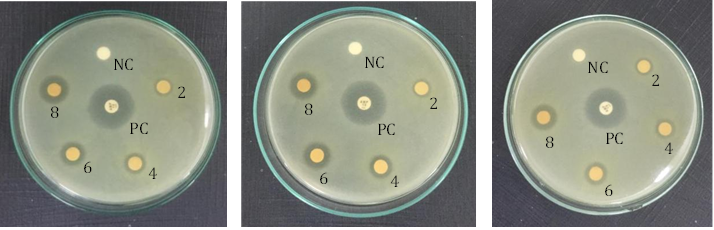
Red ginger (Zingiber officinale Roscoe) has been extensively utilized in traditional medicine and is reported to possess a wide range of biological activities. Proteus mirabilis is a pathogenic bacterium that could cause Urinary Tract Infections (UTIs). Red ginger contains flavonoid compounds, phenolics, essential oils, and tannins that may contribute to its antibacterial properties. This study aimed to evaluate the differences in antibacterial activity of the ethanol extract of red ginger at various concentrations against Proteus mirabilis and to identify its phytochemical constituents. Red ginger simplicia was macerated using 96% ethanol and the macerate was evaporated with a rotary vacuum evaporator. Extracts were made in series concentrations of 20%, 40%, 60%, and 80% w/v for the antibacterial activity test. Ampicillin was used as a positive control, while dimethylsulfoxide was used as a negative control. Antibacterial activity was assessed based on the diameter of the inhibition zones, and the data were statistically analyzed using a one-way ANOVA test, followed by a post hoc Tukey test at a 95% confidence level. The results of this study showed that there were differences (p < 0.05) in the zone of inhibition values from all series of concentrations of the ethanol extract of red ginger against Proteus mirabilis. The extract was found to contain several classes of secondary metabolites, including terpenoids, alkaloids, phenolics, flavonoids, tannins, and saponins.
Article Details

This work is licensed under a Creative Commons Attribution 4.0 International License.