Article Sidebar
Main Article Content
Abstract
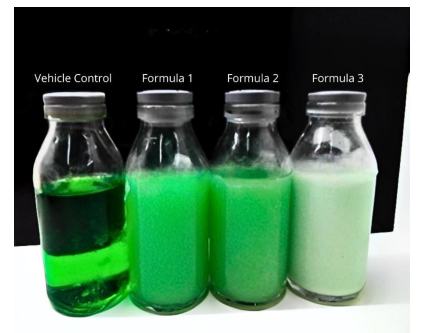
Dental caries is a prevalent oral health issue in Indonesia, largely caused by Streptococcus mutans. While Piper betle L. essential oil possesses known antibacterial properties, its utilization in a stable mouthwash formulation requires scientific validation. Objective: This study aimed to formulate Piper betle L. essential oil into a mouthwash emulsion and evaluate its antibacterial activity against S. mutans. Essential oil was obtained via steam distillation and formulated into mouthwashes at concentrations of 1%, 2%, and 4% (v/v) using Tween 80 as an emulsifier. Antibacterial activity was assessed using the well-diffusion method against S. mutans (0.5 McFarland standard) in independent triplicate wells (n=3). Vehicle control (without essential oil) and Povidone-Iodine 10% (positive control) were used for comparison. Data were analyzed using One-Way ANOVA followed by Tukey HSD post-hoc test (p<0.05). The formulation containing 4% essential oil exhibited the strongest antibacterial activity among the test groups, with an inhibition zone of 12.66 ± 1.76 mm, which was significantly higher than the vehicle control (9.29 ± 2.67 mm; p < 0.05). The positive control showed the highest inhibition (18.03 + 1.16 mm). Physical evaluation confirmed that all formulations remained stable during 7 days of storage at room temperature (27 ± 2°C), with no specific control of relative humidity, with pH values (6.46–6.82) and specific gravity (1.03–1.04 g/mL) within physiological limits. Piper betle L. essential oil mouthwash is physically stable and effective against S. mutans in a concentration-dependent manner, suggesting its promising potential as a natural alternative for oral hygiene maintenance
Article Details

This work is licensed under a Creative Commons Attribution 4.0 International License.
References
- Adiningsih, R. (2019). Pengaruh Kombinasi Emulgator CMC dan Tween 80 Terhadap Stabilitas Fisik Emulsi Minyak Ikan. Jurnal Farmasi (Journal of Pharmacy), 3(1), 33. https://doi.org/10.37013/jf.v3i1.24
- Amtha, R., & Kanagalingam, J. (2020). Povidone-iodine in dental and oral health: A narrative review. Journal of International Oral Health, 12(5), 407. https://doi.org/10.4103/jioh.jioh_89_20
- Ardini, D., & Mulatasih, R. (2020). Streptococcus Mutans Antibacterial Study: Mouthwash Preparations Formulation Using Cinnamon and Betel Leaf Essential Oils (Cinnamomum burmannii) (Piper betel L). International Journal of Innovation, Creativity and Change. www.ijicc.net
- EFSA. (2016). Scientific Opinion on the re‐evaluation of benzoic acid (E 210), sodium benzoate (E 211), potassium benzoate (E 212) and calcium benzoate (E 213) as food additives. EFSA Journal, 14(3). https://doi.org/10.2903/j.efsa.2016.4433
- Guo, X., Wang, L., Yao, Y., & Yang, B. (2024). Supramolecular encapsulation of eugenol with acyclic cucurbit[n]urils: Enhancing water solubility and in vitro antioxidant activity. Journal of Food Science, 89(12), 8312–8325. https://doi.org/10.1111/1750-3841.17600
- Hermanto, L. O., Nibenia, J., Sharon, K., & Rosa, D. (2023). REVIEW ARTIKEL: PEMANFAATAN TANAMAN SIRIH (Piper betle L) SEBAGAI OBAT TRADISIONAL. In PHRASE (Pharmaceutical Science) Journal (Vol. 3, Issue 1). http://openjournal.wdh.ac.id/index.php/Phrase/index
- Jiang, J., Wang, Z., Wang, C., Shi, L., Hou, J., & Zhang, L. (2022). Model Emulsions Stabilized with Nonionic Surfactants: Structure and Rheology Across Catastrophic Phase Inversion. ACS Omega, 7(48), 44012–44020. https://doi.org/10.1021/acsomega.2c05388
- Karim, S. F., Jumardin, W., & Senolinggi, T. (2023). FORMULASI DAN UJI AKTIVITAS ANTIBAKTERI SEDIAAN MOUTHWASH FRAKSI METANOL DAUN PUCUK MERAH (Syzygium myrtifolium Walp) TERHADAP BAKTERI Streptococcus mutans. Jurnal Ilmiah Farmasi Farmasyifa, 6(2), 161–171. https://doi.org/10.29313/jiff.v6i2.11720
- Kemenkes. (2017). Farmakope Herbal Indonesia Edisi II. Kementerian Kesehatan RI.
- Lee, S.-H., Kim, W.-H., Ju, K.-W., Lee, M.-S., Kim, H.-S., Lee, J.-H., Jung, Y.-J., & Kim, B.-J. (2021). Antibacterial and Anti-Inflammatory Potential of Mouthwash Composition Based on Natural Extracts. Applied Sciences, 11(9), 4227. https://doi.org/10.3390/app11094227
- Linke, C., & Drusch, S. (2016). Turbidity in oil-in-water emulsions — Key factors and visual perception. Food Research International, 89, 202–210. https://doi.org/10.1016/j.foodres.2016.07.019
- Lukito, P. I., Jamilatun, M., Fadellisa Hujafad, T., Latifah, I. N., Kementerian, P. K., & Surakarta, K. (2024). The Effect of Green Betel Leaves Extract Concentration in Hydrogel Acne Patch from Breadfruit Starch on the Antibacterial Activity of S. Aureus and P. Acnes. In Health and Biological Science, ICHBS.
- Mathew, M., Joyshree, C., Ratan, V. J., Kartheek, V., Thirumalai, S., & Banothu, M. N. (2022). Anti-plaque efficacy of Hi-Ora mouthrinse and 0.12% chlorhexidine gluconate in patients with chronic gingivitis: A case–control study. Journal of Oral and Maxillofacial Pathology, 26(1), 38–43. https://doi.org/10.4103/jomfp.jomfp_368_21
- Nadia Zahra, A., & Maryati, M. (2024). Uji Aktivitas Antibakteri Ekstrak Etanol Daun Sirih Hijau (Piper betle L.) terhadap Bakteri Staphylococcus epidermidis dan Escherichia coli serta Uji Bioautografinya. Usadha Journal of Pharmacy, 327–341. https://doi.org/10.23917/ujp.v3i3.412
- Nasution, L. W. , & Daulay, A. S. (2022). Perbandingan Efektivitas Formulasi Pasta Gigi Ekstrak Daun Sirih Merah (Piper Ornatum N.E.Br) Dan Daun Sirih Hijau (Piper Betle L.) Terhadap Bakteri Staphylococcus Aureus. Journal of Health and Medical Science, 1(1), 1–9.
- Riset Kesehatan Dasar. (2018). Laporan Riskesdas 2018 Nasional. https://repository.badankebijakan.kemkes.go.id/id/eprint/3514/1/Laporan%20Riskesdas%202018%20Nasional.pdf
- Rizkita, A. D., Cahyono, E., & Mursiti, S. (2017). Indonesian Journal of Chemical Science Isolasi dan Uji Antibakteri Minyak Daun Sirih Hijau dan Merah terhadap Streptococcus mutans. Indonesian Journal of Chemical Science, 6(3). http://journal.unnes.ac.id/sju/index.php/ijcs
- Sarifuddin, N. (2022). Formulasi dan Uji Aktivitias Antibakteri Mouthwash Ekstrak Daun Beluntas (Pluchea Indica Less) Terhadap Streptococcus Mutans. Biolearning Journal, 9(1).
- Septiani, L. E., Atmodjo, P. K., & Sidharta, B. B. R. (2024). Kandungan Metabolit dan Aktivitas Antibakteri Minyak Atsiri Daun Sirih Hijau (Piper betle L.) dan Sirih Merah (Piper Crocatum) Terhadap Pseudomonas aeruginosa dan Staphylococcus aureus. Prosiding SENAPAS, 2(1).
- Sharma, A., & Ranga, P. (2019). Prevalence of periodontitis in Nuh (Haryana State): The most backward district of India. Contemporary Clinical Dentistry, 10(2), 344. https://doi.org/10.4103/ccd.ccd_594_18
- Soesilo, D., Santoso, R. E., & Diyatri, I. (2006). Peranan sorbitol dalam mempertahankan kestabilan pH saliva pada proses pencegahan karies (The role of sorbitol in maintaining saliva’s pH to prevent caries process). Dental Journal (Majalah Kedokteran Gigi), 38(1), 25. https://doi.org/10.20473/j.djmkg.v38.i1.p25-28
- Sujono, H., Rizal, S., Purbaya, S., & Jasmansyah, J. (2019). UJI AKTIVITAS ANTIBAKTERI MINYAK ATSIRI DAUN SIRIH HIJAU (Piper betle L.) TERHADAP BAKTERI Streptococcus pyogenes dan Staphylococcus aureus. Jurnal Kartika Kimia, 2(1). https://doi.org/10.26874/jkk.v2i1.27
- BPOM RI. (2021). Undang-undang Nomor 29 tahun 2021 tentang Persyaratan Bahan Tambahan Pangan Campuran. In JDIH.
- Venâncio, G. N., Rodrigues, I. C., Souza, T. P. de, Marreiro, R. de O., Bandeira, M. F. C. L., & Conde, N. C. de O. (2015). Herbal mouthwash based on Libidibia ferrea: microbiological control, sensory characteristics, sedimentation, pH, and density. Revista de Odontologia Da UNESP, 44(2), 118–124. https://doi.org/10.1590/1807-2577.1064
- Weinstein, M. P. (2020). Performance Standards for Antimicrobial Susceptibility Testing (30th ed.). Clinical and Laboratory Standards Institute.
- WHO. (2025). https://atcddd.fhi.no/atc_ddd_index/. Diakses pada 20 September 2025.
- Zhang, Q., Ma, Q., Wang, Y., Wu, H., & Zou, J. (2021). Molecular mechanisms of inhibiting glucosyltransferases for biofilm formation in Streptococcus mutans. International Journal of Oral Science, 13(1), 30. https://doi.org/10.1038/s41368-021-00137-1
References
Adiningsih, R. (2019). Pengaruh Kombinasi Emulgator CMC dan Tween 80 Terhadap Stabilitas Fisik Emulsi Minyak Ikan. Jurnal Farmasi (Journal of Pharmacy), 3(1), 33. https://doi.org/10.37013/jf.v3i1.24
Amtha, R., & Kanagalingam, J. (2020). Povidone-iodine in dental and oral health: A narrative review. Journal of International Oral Health, 12(5), 407. https://doi.org/10.4103/jioh.jioh_89_20
Ardini, D., & Mulatasih, R. (2020). Streptococcus Mutans Antibacterial Study: Mouthwash Preparations Formulation Using Cinnamon and Betel Leaf Essential Oils (Cinnamomum burmannii) (Piper betel L). International Journal of Innovation, Creativity and Change. www.ijicc.net
EFSA. (2016). Scientific Opinion on the re‐evaluation of benzoic acid (E 210), sodium benzoate (E 211), potassium benzoate (E 212) and calcium benzoate (E 213) as food additives. EFSA Journal, 14(3). https://doi.org/10.2903/j.efsa.2016.4433
Guo, X., Wang, L., Yao, Y., & Yang, B. (2024). Supramolecular encapsulation of eugenol with acyclic cucurbit[n]urils: Enhancing water solubility and in vitro antioxidant activity. Journal of Food Science, 89(12), 8312–8325. https://doi.org/10.1111/1750-3841.17600
Hermanto, L. O., Nibenia, J., Sharon, K., & Rosa, D. (2023). REVIEW ARTIKEL: PEMANFAATAN TANAMAN SIRIH (Piper betle L) SEBAGAI OBAT TRADISIONAL. In PHRASE (Pharmaceutical Science) Journal (Vol. 3, Issue 1). http://openjournal.wdh.ac.id/index.php/Phrase/index
Jiang, J., Wang, Z., Wang, C., Shi, L., Hou, J., & Zhang, L. (2022). Model Emulsions Stabilized with Nonionic Surfactants: Structure and Rheology Across Catastrophic Phase Inversion. ACS Omega, 7(48), 44012–44020. https://doi.org/10.1021/acsomega.2c05388
Karim, S. F., Jumardin, W., & Senolinggi, T. (2023). FORMULASI DAN UJI AKTIVITAS ANTIBAKTERI SEDIAAN MOUTHWASH FRAKSI METANOL DAUN PUCUK MERAH (Syzygium myrtifolium Walp) TERHADAP BAKTERI Streptococcus mutans. Jurnal Ilmiah Farmasi Farmasyifa, 6(2), 161–171. https://doi.org/10.29313/jiff.v6i2.11720
Kemenkes. (2017). Farmakope Herbal Indonesia Edisi II. Kementerian Kesehatan RI.
Lee, S.-H., Kim, W.-H., Ju, K.-W., Lee, M.-S., Kim, H.-S., Lee, J.-H., Jung, Y.-J., & Kim, B.-J. (2021). Antibacterial and Anti-Inflammatory Potential of Mouthwash Composition Based on Natural Extracts. Applied Sciences, 11(9), 4227. https://doi.org/10.3390/app11094227
Linke, C., & Drusch, S. (2016). Turbidity in oil-in-water emulsions — Key factors and visual perception. Food Research International, 89, 202–210. https://doi.org/10.1016/j.foodres.2016.07.019
Lukito, P. I., Jamilatun, M., Fadellisa Hujafad, T., Latifah, I. N., Kementerian, P. K., & Surakarta, K. (2024). The Effect of Green Betel Leaves Extract Concentration in Hydrogel Acne Patch from Breadfruit Starch on the Antibacterial Activity of S. Aureus and P. Acnes. In Health and Biological Science, ICHBS.
Mathew, M., Joyshree, C., Ratan, V. J., Kartheek, V., Thirumalai, S., & Banothu, M. N. (2022). Anti-plaque efficacy of Hi-Ora mouthrinse and 0.12% chlorhexidine gluconate in patients with chronic gingivitis: A case–control study. Journal of Oral and Maxillofacial Pathology, 26(1), 38–43. https://doi.org/10.4103/jomfp.jomfp_368_21
Nadia Zahra, A., & Maryati, M. (2024). Uji Aktivitas Antibakteri Ekstrak Etanol Daun Sirih Hijau (Piper betle L.) terhadap Bakteri Staphylococcus epidermidis dan Escherichia coli serta Uji Bioautografinya. Usadha Journal of Pharmacy, 327–341. https://doi.org/10.23917/ujp.v3i3.412
Nasution, L. W. , & Daulay, A. S. (2022). Perbandingan Efektivitas Formulasi Pasta Gigi Ekstrak Daun Sirih Merah (Piper Ornatum N.E.Br) Dan Daun Sirih Hijau (Piper Betle L.) Terhadap Bakteri Staphylococcus Aureus. Journal of Health and Medical Science, 1(1), 1–9.
Riset Kesehatan Dasar. (2018). Laporan Riskesdas 2018 Nasional. https://repository.badankebijakan.kemkes.go.id/id/eprint/3514/1/Laporan%20Riskesdas%202018%20Nasional.pdf
Rizkita, A. D., Cahyono, E., & Mursiti, S. (2017). Indonesian Journal of Chemical Science Isolasi dan Uji Antibakteri Minyak Daun Sirih Hijau dan Merah terhadap Streptococcus mutans. Indonesian Journal of Chemical Science, 6(3). http://journal.unnes.ac.id/sju/index.php/ijcs
Sarifuddin, N. (2022). Formulasi dan Uji Aktivitias Antibakteri Mouthwash Ekstrak Daun Beluntas (Pluchea Indica Less) Terhadap Streptococcus Mutans. Biolearning Journal, 9(1).
Septiani, L. E., Atmodjo, P. K., & Sidharta, B. B. R. (2024). Kandungan Metabolit dan Aktivitas Antibakteri Minyak Atsiri Daun Sirih Hijau (Piper betle L.) dan Sirih Merah (Piper Crocatum) Terhadap Pseudomonas aeruginosa dan Staphylococcus aureus. Prosiding SENAPAS, 2(1).
Sharma, A., & Ranga, P. (2019). Prevalence of periodontitis in Nuh (Haryana State): The most backward district of India. Contemporary Clinical Dentistry, 10(2), 344. https://doi.org/10.4103/ccd.ccd_594_18
Soesilo, D., Santoso, R. E., & Diyatri, I. (2006). Peranan sorbitol dalam mempertahankan kestabilan pH saliva pada proses pencegahan karies (The role of sorbitol in maintaining saliva’s pH to prevent caries process). Dental Journal (Majalah Kedokteran Gigi), 38(1), 25. https://doi.org/10.20473/j.djmkg.v38.i1.p25-28
Sujono, H., Rizal, S., Purbaya, S., & Jasmansyah, J. (2019). UJI AKTIVITAS ANTIBAKTERI MINYAK ATSIRI DAUN SIRIH HIJAU (Piper betle L.) TERHADAP BAKTERI Streptococcus pyogenes dan Staphylococcus aureus. Jurnal Kartika Kimia, 2(1). https://doi.org/10.26874/jkk.v2i1.27
BPOM RI. (2021). Undang-undang Nomor 29 tahun 2021 tentang Persyaratan Bahan Tambahan Pangan Campuran. In JDIH.
Venâncio, G. N., Rodrigues, I. C., Souza, T. P. de, Marreiro, R. de O., Bandeira, M. F. C. L., & Conde, N. C. de O. (2015). Herbal mouthwash based on Libidibia ferrea: microbiological control, sensory characteristics, sedimentation, pH, and density. Revista de Odontologia Da UNESP, 44(2), 118–124. https://doi.org/10.1590/1807-2577.1064
Weinstein, M. P. (2020). Performance Standards for Antimicrobial Susceptibility Testing (30th ed.). Clinical and Laboratory Standards Institute.
WHO. (2025). https://atcddd.fhi.no/atc_ddd_index/. Diakses pada 20 September 2025.
Zhang, Q., Ma, Q., Wang, Y., Wu, H., & Zou, J. (2021). Molecular mechanisms of inhibiting glucosyltransferases for biofilm formation in Streptococcus mutans. International Journal of Oral Science, 13(1), 30. https://doi.org/10.1038/s41368-021-00137-1